Friday, April 4, 2014

The 7 Types of People Who Volunteer in Sudan


Who Actually Goes to Volunteer in Sudan?

The following are a few traits that are true about most people who come to volunteer in Sudan:
  •          Has a genuine interest in travel or learning about different cultures than their own
  •          College educated 
  •      Doesn’t know exactly what’s next for them in life
  •          Has volunteered in the developing world before
  •          Doesn’t speak Arabic
  •          Did not wake up one morning and have some sort of epiphany about saving the world
  •          Owns a copy of the Bradt Sudan Travel Guide

Sunset over Hamed al Neel Omdurman

Declaimer: These are loose caricature profile descriptions, in real life many of my fellow volunteers have characteristics from several of these categories and perhaps some don’t fit into any of these categories, despite my catchy title. Even I don’t fit into all the statements above, this is my first time volunteering, and just because I’m able to give an outline of “who” volunteers, it is much harder to encompass “why” people volunteer. People’s motives are personal and in many cases too complex to fit into a nice short categorized description. 

Building on Tuti Island

The 7 types of people who volunteer in Sudan are as follows: 

The Arabic Student
     The Arabic student arrived to Sudan with two suitcases. One with clothes and supplies and one with books.  The Arabic student declines invitations to hang out at a pizza place with fellow ex-pat colleagues opting for meeting local friends for their cousin’s wedding (the 4th wedding they’ve been to this week). They throw Arabic phrases in all their conversations even those with their kawaja (white) friends. The Arabic student even buys a jalabiya (local dress for men) or rocks henna on their hands (local tradition for women) and doesn’t shy from talking to people in the street.

The World Traveler
     The world traveler is deeply interested in gaining a new cultural experience. The World Traveler has been a passport holder for as long as they can remember. They’ve camped in the desert, meditated with monks, and became a tour guide in Cairo. This isn’t their first time at the rodeo of working in a “developing country.”  They are interested doing the “touristy” stuff in Sudan to check items off their bucket list, and also meeting and enjoying the company of the Sudanese people. The world traveler can cook cuisine from many countries thru some creative improvisation with local ingredients and gives great small gifts from their past travels. The world traveler has great advice.

The Long-term Volunteer
     The long-term volunteer is a quirky but awesome individual.  One day he/she found an ad in a newspaper calling for volunteer teachers in Sudan and the rest is history. They can’t help themselves but keep coming back with a month trip home every couple of years. Even though they have lived here the longest they aren’t self-centered or conceited in the least bit. They are always willing to share advice, jokes, and stories. They maneuver otherwise sticky situations gracefully with a huge smile, decent Arabic, and a spring in their step.

The Recent College Grad
     The recent college grad is looking for a break, trying to push off the “real world” or seeking unemployment by choosing to come to Sudan for a “meaningful” gap year. The recent college grad probably studied international affairs, history, or anthropology.  In school they specialized in terrorism, women and forced migration, or peace studies. They would like to find work in their government’s Foreign Service, international development, or apply to a graduate program in conflict resolution. The recent college grad expected they’d be living in a hut but is cool with the modern conveniences of Khartoum.

Peter Pan
     Peter Pan is a white man who came to Sudan because he is lost. He talks about his plans to start a business, he is destined to be a social entrepreneur, but never will because then he’d have to grow up. He thinks it’s such a shame that Sudan has let itself go since the British left. Peter Pan complains about how frustrating the Sudanese culture of being late, laid back, and unorganized is but ends up acting this way as well. Peter Pan is a charmer. He fancies himself a number of things. He works the system.  He’d rather “live like a king” in Sudan. Peter Pan doesn’t want to settle down in one place just yet and probably will stay in Sudan until he secures his next gig in Thailand or Argentina.

The Ex-Corporate Lawyer
     The ex-corporate lawyer is a nonsense risk taker who decisively knew they had to make a change in their life and quit their fancy high-paying job at a law firm.  The ex-corporate lawyer is head strong and unafraid of new experiences. They went back to school and decided they wanted a job with more meaning in life. They are the “mom” or “dad” of the group planning socializing time, encouraging volunteers step out of their comfort zones, and making sure everyone is healthy. The ex-corporate lawyer has a strong moral compass and is assertive in stating their opinions. . They throw themselves into their teaching job like they would any work they had done back home,  and plan lessons extensively which can be frustrating when as happens people are late, buses take wrong turns, and classes are cancelled but their enthusiasm ensures that they make great Sudanese friends.

The Religious Person
     I don’t know much about the religious person because up to now in my short experience I have yet to meet someone who fits this profile. I do think its worth mentioning the religious person due to the numerous stories and instances of this character I’ve heard about. It seems as if the religious person is usually female, very sweet, and means well, but at times finds themselves isolated or at tension with life as a volunteer teacher in a predominately Muslim society and with the comparatively less-religious volunteers.
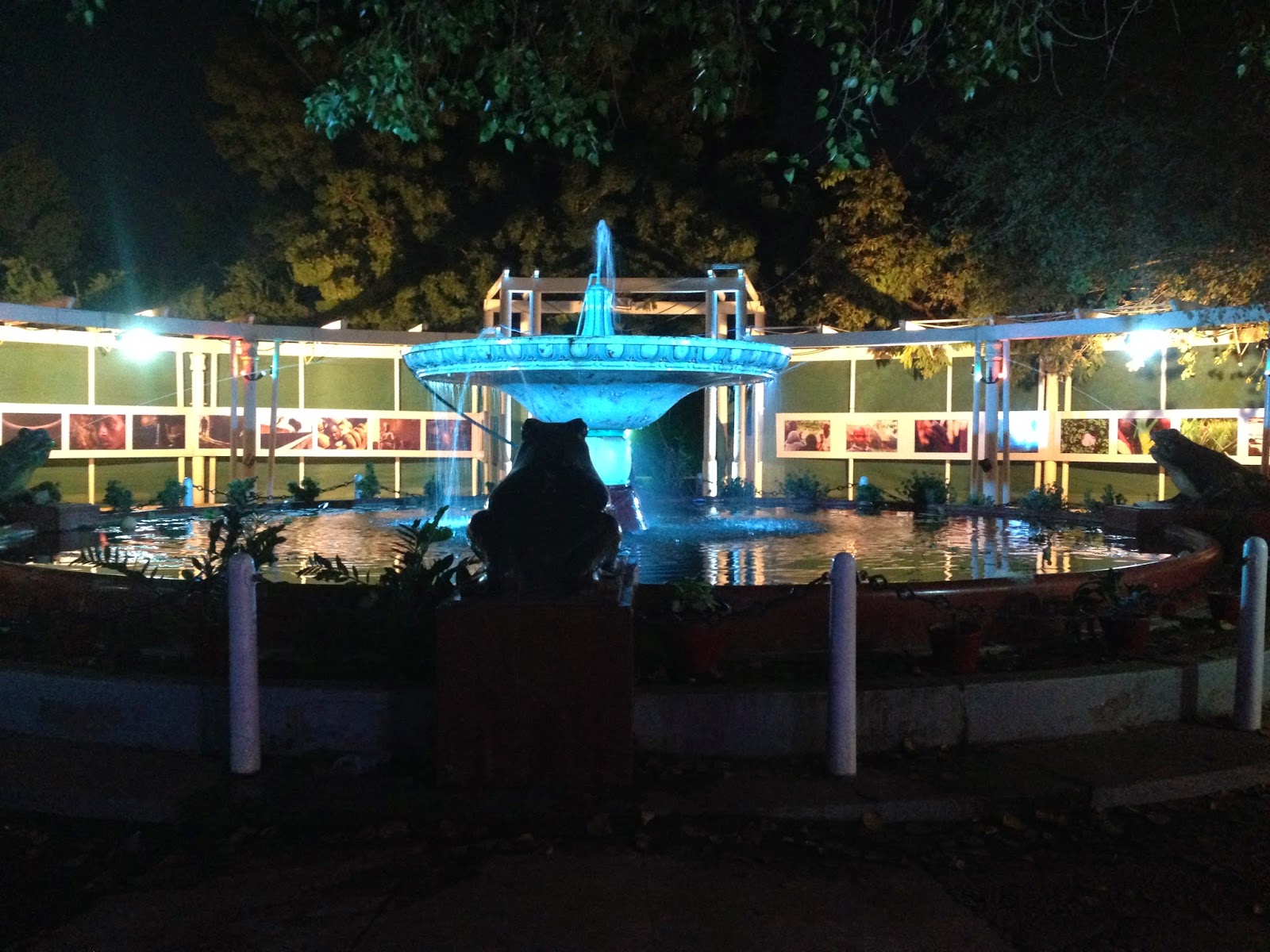

Khartoum Botanical Gardens 


Saturday, March 22, 2014

WhyDev Gets it Wrong: Volunteering to teach English is NOT the new volunteering in orphanages (Part 1)


This is a direct response to a recent blogpost by the international development blog, WhyDev criticizing English teacher “voluntourism” in developing countries. They say “If you want to teach, teach. If you want to travel, travel. Don’t do both. Don’t mix business with pleasure.”  To counter their argument I have a number of points. This got me thinking so much that I’m even going to address arguments not presented in their post as part of a series. My disclaimer is my arguments are drawn from working as volunteer English teacher for 6 months with Sudan Volunteer Programme and that I believe there is room for debate on the merits and drawbacks of English teacher volunteering and voluntourism and that every country, volunteer program, and individual’s experience is different.

What does volunteering to teach English in a development country actually lead to?

English Teacher = Social Worker

First the author makes the comparison of teaching and education delivery to volunteering in an orphanage doing social work. I have no qualms about the criticism about short-term volunteering at orphanages which has anecdotal and through scientific research been proven too often to cause more harm than good to the orphans who became traumatized and re-traumatized from the experience. An English teacher who instructs a class of students for several hours in a day and an individual essentially acting as a primary care giver for a group of young children by feeding, clothing, and washing them, have two completely different types of influence and opportunity to influence a child’s life. Obviously great teachers have the power to make a great influence on their students lives, and a poor teacher to set their students back. I think most people would agree that the risk or potential to do harm as a social worker is much higher than as a teacher. It’s this type of harm that causes orphanages to institute extreme “No picking up” or “No hugging” rules which are put in place actually to protect the children in their care.  I agree that child-based voluntourism is inherently problematic, but we should be discretionary about the differences between someone acting in a substitute parental role then leaving after a month and that same situation with a child’s teacher, camp counselor, or day care professional. Sometimes these roles overlap, teachers are mentors; sometimes our biggest support system, orphans get placed in daycare too, and of course many young children get attached very quickly in almost any circumstance. This requires further consideration, but certainly structurally and responsibility-wise the jobs of an English teacher and social worker are different.

A native speaker teaches an evening class
Unqualified teachers undermine the profession and students’ learning outcomes

          So setting that aside let’s address the other major qualm in the article which is that “education is  an academic discipline and professional practice” which I couldn’t agree more with, and despite this, the requirements or qualifications to join many volunteer English teaching programs require no teaching background, certificates, or prior training. The same criticism of Teach for America by The Onion that we shouldn’t leave the education of our children to armatures, could be made of English teaching voluntourists. Teaching is an occupation and shouldn’t be something someone can chose to do as a leisure activity. However, there is one major difference which is that volunteer teachers aren’t responsible for teaching core curriculum; they’re teaching English. This is why I have come to the conclusion that if done correctly being a native speaker teaching English in a country where English is a second language can, when done correctly, count as a providing a much needed skill and opportunity to practice and improve speaking in which without exchange or volunteer programs ESL students would not get.
         I in fact have been told how much I am needed as “a native speaker” by several English department administrators here in Khartoum. They say the students “know how the clock works, but they can’t tell the time.” Countless students have approached me and said almost verbatim that they “can read and write perfectly but when it comes to speaking they face many difficulties”. This has also led to having to convince time and again students, administrators, and random inquirers on the street that learning English takes time, hard work, and practice and that having a white American teacher isn’t magically going to make them fluent in two months but the sincere desire to improve is pervasive.
          Often times, and in best practice volunteer English teacher teach “Conversation”, or “Speaking and Listening” and occasional “General English” class when other staff are not available. They facilitate English clubs based on weekly discussion topics. They teach public speaking or debate. This type of teaching does not require the expertise taught in a Master’s program in Education. Any English speaker with a B.A. or even high school diploma could be an effective teacher in this setting but surely some sort of training or orientation, in teaching best practices and cultural awareness should be provided by the volunteer program.
          When talking about quality of professional Sudanese English teachers in Sudan I can’t say I’ve been overwhelmingly impressed. I’ve met several English professors with whom I can not hold a conversation with and they are still consistently employed. I’ve witnessed not only teachers who exhibit a poor quality of English but who also exhibit a poor quality in teaching strategies which speaks to the systematic problems with Sudanese educational institutions. I sat through an English class where a teacher, read, 4 definitions verbatim, repeated them with varying phrasing and volume level, to his 2nd year college students in a class blocked for 2 hours’ time. 
       If your sitting at home thinking "Eh I could do better than that guy, I'd do a great job!"  The example above shouldn't be the measuring stick to which we compare potential volunteer teachers. Students deserve a hell of a lot lot better. And a lot more goes into being a  "good" volunteer teacher in a developing country than traditional teaching and English language skills. They ll be more on that issue Part 2.  

English teacher colleagues and myself

Volunteers undermine local labor

          I’d also make the argument that unlike construction volunteer trips building schools or wells that with teaching as a volunteer you aren’t competing with or replacing local labor. There is no reason, a GOOD Sudanese English language teacher couldn’t find classes or private tutoring, especially for courses on Phonetics, IELTS and TOEFL preparation, and Transcription.
          There is a huge demand for English teachers. Bad teachers aren’t out of work either. This isn’t because there is a lack of quality Sudanese teachers, rather I have been told many have emigrated temporarily to teach in Saudi Arabia or Libya for higher wages and I’d argue higher quality education administration which reflect the two biggest complaints my Sudanese colleagues have about teaching in Sudan.
         Volunteers aren’t corroborating the public education system’s failures nor are they an obstacle to reform. If there was the case that volunteers were teaching in a country which was experiencing teachers’ strikes or a flood of volunteers were putting local teachers out of work it would be a different story.

STAY tuned for part 2 which will address the argument that teaching English is a form of neocolonialism .

Tuesday, February 11, 2014

The Social Scene in Khartoum: Concerts, Culture, and Dancing


Upon coming to Sudan I was warned that it doesn’t exactly have a vibrant social scene, in the traditional Western sense. I was told of course there arn’t movie theaters*, concerts are limited, and there isn’t exactly night life. My social life in Sudan has proved much of this to be quite contrary. I’ve frequented concerts, parties, and stayed out very late on Nile Street. This can’t be attributed to getting on the inside of the Khartoum expat social scene either, as Rachel and I have happily found ourselves slightly outside that circle. Rather the past couple weeks I’ve had my fair share of exposure to Sudanese culture and entertainment through several festivals. There have been really great events.


First Sudan Film Factory partnered with a number institutions including the Goethe Institute (German cultural institute) and hosted Sudan’s First Independent Film Festival. How great is this? I was lucky enough to get my name on the list for the opening night. On opening night there was a screening of “Faisal Goes West” a short film about a family who emigrated from Sudan to Texas. You can watch the trailer here because I’m about it SPOILER ALERT in my experience and review of it. I loved that the film maker chose to tell this story framing it around the struggle of immigrants and not making it about refugees. There is even a line “Darfur. Yeah we aren’t from there.” It was also super interesting to watch the film as an American in an audience full of Sudanese. In many ways America is still “a big dream” for many Sudanese who I’ve talked with. Rachel and I estimated about 3 out of every 10 Sudanese friends or colleagues have told us they applied for the lottery. The movie does have its cringe-worthy moment where Faisal runs into some guys that jump him. Obviously I don’t want my Sudanese friends to think that if they come to American they are going to be attacked or robbed and that we have become an intolerant society of outsiders in America so yeah my initial reaction was a sarcastic “oh great”. Upon reflection though I think the scene, clearly the climax of the film, speaks symbolically about the difference between perception and reality of the typical immigrant’s journey. Anyway it’s a great film you’ll laugh, you’ll cry, you’ll wonder if there really are still chicken farms in Texas.

          After the movie there was a great performance by Dina Al Wadi a French-Egyptian Singer who wore a hot pink mumu type dress. She even sang some Sudanese songs of which the crowd loved and sang along with. I think she was the most talented singer I’ve seen perform in Sudan.


          Anyway I went to an additional screening of another film though the festival screened maybe up to a dozen and generally think the film festival was a success so that’s really great. Additionally there was a Sudanese Cultural Festival hosted by the Sudanese National Museum and co-sponsored by the British Council. During this festival I attended two concerts. One showcased a local Reggae band and the following night a British Dub-Reggae Band (cause apparently that’s a thing now) performed.  I think I’ve mentioned before that many Sudanese love reggae music. At one point one of the nights hosts made the claim that reggae music started in East Africa…a claim which definitely raised an eyebrow or two. The concerts ended at 11 due to a noise curfew or something. While generally I don’t want to put down these types of events I was scratching my head a bit at the fact that a British band was headlining the final night of a “Sudanese” cultural festival. To the organizers’ credit for a few songs some local artists joined the band on stage.
It could have been an off-hand remark but my friend Mohammed turned to me during Dina al-Wahi’s performance and said that because there was such an international crowd she should sing some American music. I get the impression that Sudanese culture isn’t perceived as “special” or “good enough” and was reminded of this again with the British band incident.

     
          As far as entertainment between festival based events (and there seems to be a festival of some sort every month) there are several restaurants that have live-singers on Thursday nights. One of which is a popular Souq Al-Arabi restaurant called Papa Costas. All I can say is I’m still recovering from my experience dancing and listening to the band play everything from “Hotel California” to popularized Arabic music to a Tom Jones inspired take on “Yesterday” and I don’t think any amount of words could fully describe my night there, but it was definitely fun and unexpected.


Finally not to leave out one of the more glamorous nights out I most recently attended a very lovely party at the German residence located at a Nile front property.


*The newly opened Afra Mall has a theater showing Egyptian movies 

Saturday, January 25, 2014

The Fabulous Life 4 Months Later


This past weekend marked my 4th month Sudanniversary. That’s right, it’s been 4 months since I arrived in Sudan. At this point it’s safe to assume “I’m settled” and have established a normal routine. A question my mom asks me a lot is “What do I actually do all day?” This is totally fair. Even before arriving I was told my volunteer hours teaching at the university would be less than 20 per week.  Going from the “busy” life as a college student, to my Summer 9-5 gig, to life in Sudan has been a huge change.

First I’ll directly answer the question, “What do I actually do with my time?”  I currently teach twice a week at my university. It’s quite the trek (a half hour commute to Kadaru), although we are quite spoiled to have a university car drive us to and from our home, but the drive back in the afternoon leaves us zombie-like only alleviated by naps.  Activities at university are equal part having tea, dealing with administrative issues, and actual teaching. Additionally, I am giving twice weekly English classes to the staff of a center for civil society. Eventually, inshallah, I might add another private class in the afternoons.

Besides teaching I have been reading and writing working on assisting some Sudanese students with a variety of applications and graduation projects and also separately reading anything I can get my hands on about the conflict in South Sudan.  Rachel and I also have an inclination to make sure everyone in our volunteer group is doing ok and that new volunteers are being taken care of. So we do spend quite a bit of time with our friends in the program.

I have also tried my hand at cooking! WHAT?! Its true folks, with more time and little variety in our neighborhood I’ve actually become interested in cooking for myself. It all started from Rachel’s encouragement and being inspired by watching a fellow volunteer who was trained as a chef make pasta sauce out of cream cheese and canned cheese (pretty genius). I’ve always seemed to have some mental block to cooking; that it was too difficult, too time-consuming, and too depressing to cook for one person. This meant I was queen of take-out. While I was literally living the “sweetlife” with trips to Sweetgreen and One-Fish Two-Fish sushi at least once easily three times a week  I actually have found cooking much less stressful and more rewarding than I previously had thought it could be.

I think this is because for the first time in as long as I can remember, I have free time and I’m not in the least bit stressed out.  Don’t get me wrong living and volunteering in a foreign country has its frustrating moments, but overall I’m much less stressed out than I was during college. When volunteering in a foreign country it’s easier to accept that a large part of your life is out of your control, what you can control is how you react to otherwise frustrating or stressful situations.  Sudanese culture specifically, is a lesson in patience for any Westerner. If your bus breaks down its “ma mushkila” (no problem).

Some friends I invited over for dinner! 

 Now that I am over the “Can I actually do this?” and homesickness bumps, which was shrug-worthy compared to my pre-departure “Wait. Hold up. I’m actually doing this” moments of freaking out,  I’ve had a lot of time to re-think about what I want to get out of my experience and the rest of my time here. Part of this list includes travel, improving my Arabic (which is still shwayah-shwayah), making more friends, and trying to create a working group or some sort of contribution for my previous life with Banaa.org.

Further Related Reading
On reflecting on post-grad life: Coffee and Stink

On relaxing as a young adult: xoJane

Saturday, January 4, 2014

What’s Going on in South Sudan in less than 800 Words


Recently I’ve received several messages asking about my safety and security a la crisis in South Sudan.  First of all let me state that I’m safe and sound in Khartoum and really there is no reason to worry about my security here.
                The truth is of course that while typing this comfortably from my neighborhood in Bahri it seems unfounded that a crisis in Juba, South Sudan could affect me. It would be the same as if I were sitting in Washington, DC and war broke out in Mexico. However, the questions do have a legitimate basis. The existence of the state of South Sudan came about two years ago. It was the result of a decades long civil war in Sudan between the North, made up a mostly Arab Muslim population, and the South, made up of a more African Christian population. The motive of the war wasn’t necessarily ethnic or religious, it was a political conflict, of the center vs the periphery, with Muslims in Darfur and the Nuba Mountains joining the ranks of the South’s rebel army, the SPLM, to fight the center in Khartoum. The war ended in 2005 with the signing of an internationally brokered peace agreement that detailed elections and a referendum on the status of the South should take place. The South has a long history prior to independence of being administered separately from the North. Everything from the education system, legal codes, and language of governance were different. It didn’t surprise anyone that the South voted for succession in 2009. It did surprise analysts when the North, peacefully allowed the succession to occur.
Upon receiving independence, in part thanks to the support of the international community including the United States, analysts outlined the challenges the South would face as independent country. The biggest of which were development and security sector reform. South Sudan was given the title of World’s Poorest Country in 2011, so development concerns were very real and very much tied to security. Secondly, there was the challenge to take a rebel force and create a national military structure. Additionally, a government that represented the interests of the many ethnicities or tribes of South Sudan had to be established to keep any ethnic tension at bay.
Flash forward. Has South Sudan failed? Actually there are a number of political events that led to the conflict erupting today. President of South Sudan, Salva Kiir has had extensive problems of corruption in his government. In, June, he reported there was a missing 4 billion dollars from his budget. Many of the problems and complaints in development started to mirror that in the North; resources go to the center, the capitol and not to the periphery.  Kiir also caught our attention when he fired his cabinet this past July and then went to fire his Vice President Riek Machar. Machar, ethnically Nuer, had recently made public his bid for the SPLM chairmen position seemingly looking ahead at the 2015 elections. Machar and Kiir, ethnically Dinka, have a history of clashes in 1991 when there was some internal fighting amongst the SPLA in Bor a town outside of Juba.
The events that sparked the current clashes occurred on December 15. It is unclear whether there was a coordinated coop attempt and reactionary suppression amongst the Presidential Guard. This event whether planned or incidental became a flashpoint of insecurity that opened the doors to the opportunistic violence we are hearing about today. Machar escaped Juba and took the town of Bor, a town predominately Nuer, with his rebel army. There are reports of ethnic targeted killings coming from both sides, but this can not confound the motivation and cause at large...a political power struggle between the elite leaders in South Sudan.
As talks begin in Addis Abba, Ethiopia today a cease fire has not been negotiated as of yet. Bolstered Machar now holds onto an oil rich base in Bor and Kiir recently received troops and full backing from Uganda. Peace talks could end the violence but could also be a political maneuver to appease the international community while behind the scenes both sides could be escalating preparations for continued fighting.  The international community and the United States should emphasize there is no military solution in South Sudan, only a political agreement can resolve the crisis and prevent civil war. The people of South Sudan deserve peace. Their leaders need to set aside their selfish aspirations and do what is best for their people. 

For further reading:

Generally reporting by Western Media on the S.Sudan Crisis has been atrocious either straight up lazy or incorrect factually leading me to think even, The Kingston Reporter, could conduct better journalism. Here are a few articles that didn’t make me #facepalm.

Experts' Insights
Longform But Excellent

Friday, January 3, 2014

Let’s talk about Food


OK so far I’ve covered a bit bout the landscape and society in Sudan. I haven’t written nearly enough about something Sudanese are generally excited about…traditional Sudanese food. Within Sudanese traditional food I’ve found some of the strangest flavor combinations out there. Not just strange meaning just new and different spices but I’d think some combinations would be counter intuitive even for a non-Westerner. That being said I’ve also had some amazing meals.
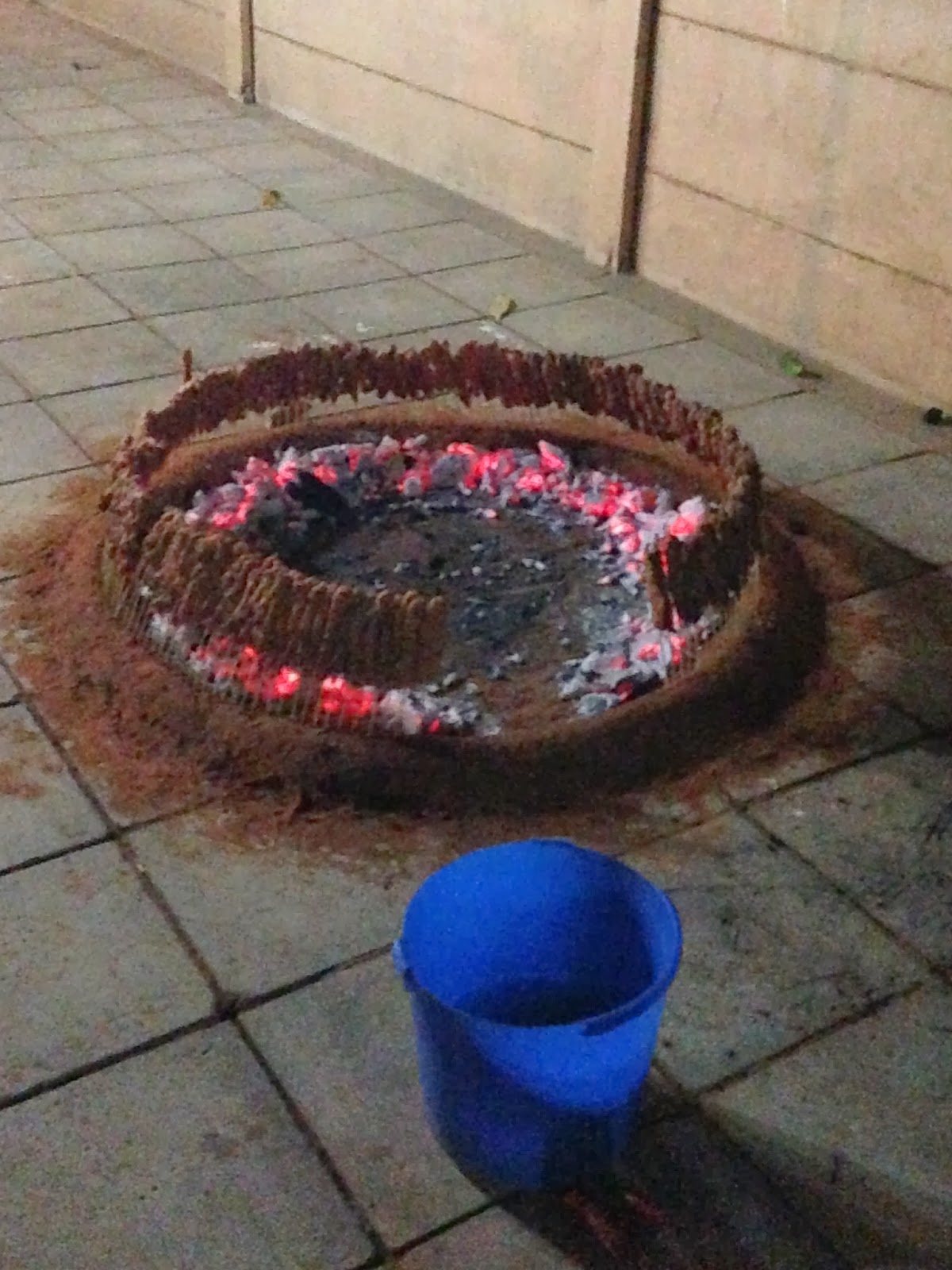
BBQ in the driveway

Before I dive in I should note as I have before that being in Khartoum exposes me to much more international influence than other places in Sudan. One of my first meals in Sudan was a fried chicken sandwich in Al Waha Mall (don’t judge me).  Khartoum has its version of “fast-food,” including fried chicken places, burgers and pizza. They also have a few up-scale restaurants, hotels, cafes, and ice cream shops where one can find treats such as Fettuccine Alfredo, apple danish, and brownie sundaes.  Additionally there is a large presence of Turkish, Egyptian, Syrian, Ethiopian, and Yemini food much of which is new to me. Once when asked about the food by my students I mistakenly told them I liked Chicken Shawarma which was flat out rejected as not Sudanese food, even though they have a Shawarma place on every corner in Khartoum. I’ll be sure to distinguish in this post when I’m referring to traditional or local food and the food I happen to be eating which might not be Sudanese.

The volunteers eating at our favorite Yemani restaurant "Hadraumat"


First the 4 best foods I’ve had:


  1. Fresh Bread. Every night we go out and buy fresh rolls for the next morning. “Hesh” (Bread) is extremely cheap and available. For traditional meals in Sudan bread is used in place of utensils so people buy bags and bags of it daily for their families.  It has sincerely forever ruined bread in America for me including ending any sort of opinion I had in the great debate between Bertucci’s rolls and Olive Garden’s breadsticks.  It’s all LIES.
  2. Fresh Juice. In the same vain, fresh juice is also a great cheap refreshing treat available most cafeterias. One of my favorites is juahfa (I think guava), but there is also strawberry, mango, and orange, and many more I’m sure. Carcadeh is hibiscus juice or tea is also very good. The trick here is hoping they don’t use too much sugar in the juice. It’s not uncommon when going to a friend’s home to be presented with fresh juice upon arrival. 
  3. Shakshukah. Buzzfeed stole my thunder with  26 Reasons Shakshuka is the Most Perfect Food and I can't but help to agree. 16 and 23 (without the cheese) are both good examples of Sudanese style Shakshukah. Buzzfeed left out the biggest “fun fact” about it which I’ve been told almost every time we’ve eaten it. “Shakshuka” sounds similar to the word prostitute so when you order it often people smirk at you. Rachel hopes to learn how to cook it, which I fully support.
  4. Lamb on Eid al Adha. Eid al Adha is a Muslim holiday. It’s a festival that involves a family celebration. Eid can last up to two weeks, during which time universities and government buildings are closed. I was lucky enough to be invited to several Eid feasts at the family homes of a few different Sudanese friends. Part of the EId traditions is slaughtering a lamb or goat. Each family buys a lamb or goat and it must be slaughtered by the third day of Eid. It's slaughtered in a very humane and specific way with different parts of the meat going to neighbors, and the mosque, and keeping some of course for the feast. A concept that seemed very foreign to me upon hearing it now doesn’t seem so strange.  Anyway so the one negative during Eid was arriving at our friend’s house around 2 and not eating until 8…granted they do literally have to slaughter the lamb but still! It was well worth the wait perfectly seasoned and tender lamb with many vegetable and other side dishes. 

Did someone order fried fish?

The grand opening of a new restaurant and ice cream shop had some special guests
Traditional Sudanese Food  "Aseeda" and "Moola"

Ok so the picture above shows a traditional Sudanese dish served with bread called grassa. Aseeda is like a porridge. Above are two versions of Aseeda one savory with Moola, and one has a yogurt-like topping. The pasta dish on the left was pasta with syrup on it...straight out of Elf. One colleague even took the sugar dish (out for tea) and dumped spoonfuls of sugar on the pasta. The Sudanese sweet  tooth is no joke.


Saturday, December 21, 2013

A Day Trip Back in Time


When a friend asked if I was interesting in joining her and some friends on a day trip to the pyramids at Meroe I jumped at the chance. So early in the morning Rachel and I were met by a van of people, mostly friends, and some new faces. The drive to Bejwarriah was somewhere between 3 and 4 hours north of Khartoum. Other than a brief visit to a farm a few weeks ago, this was my first time traveling outside Khartoum. The scenery on the drive was spectacular. In the morning it was quite foggy and the grey sky sat on the semi-arid desert landscape which we drove through. Other than a few check points, gas stations, and a few clusters of shops the scenery was open, endless flat horizon sparsely scattered with trees. This was Africa.


We ended up going to three sites. When we arrived to the first site, we jumped out of the van ready to explore. It was a bit breezy and not too hot. Its winter in Sudan too making it the perfect time to visit. The second site was “The Royal City.” It was really surreal to be at these archaeological sites. I’ve seen many “Ancient Egypt” exhibits at museums and I really felt like I could imagine the artifacts I had seen in museums in these places. It also was pretty cool being the only visitors around. At the third site just as the van pulled up, I saw men off in the distance riding camels towards us. They ended up lining up and selling us a ride up to the pyramid site and back(only  20SDG!). Riding a camel was sort of terrifying at first, but my friends mom kept yelling "Relax! Relax!" The hardest part is when the camel goes to sit you are flung forward and feel like you'll go flying off the front of the saddle, but I managed ok. Riding a camel in a skirt is hard! 


Brief info about "the pyramids" most of which I got from Google and from what people told me. There are more than 230 known pyramids in Sudan. They are significantly smaller and steeper than the ones in Egypt.  Most were built between the 8th Century B.C.E. and the 4th Century C.E. The ancient Nubian people stretched across south Egypt into northern Sudan.They established the Kingdom of Kush. They settled along the lower Nile. Some Italian treasure hunters damaged the tops of most of the pyramids because they were told the gold was hidden there. There was no known major event that ended the civilization (i.e. famine, disease, war) and it is believed it just faded away over time. While doing my "research" I found out the pyramids of Meroe are listed as a UN World Heritage Site, so that's pretty cool too.  For more: pyramidshistory Wikipedia. K enough blabbering on to the main attraction MORE PICTURES. 

The first site

"Pyramids are all around us"

 
The Royal City


The third site